
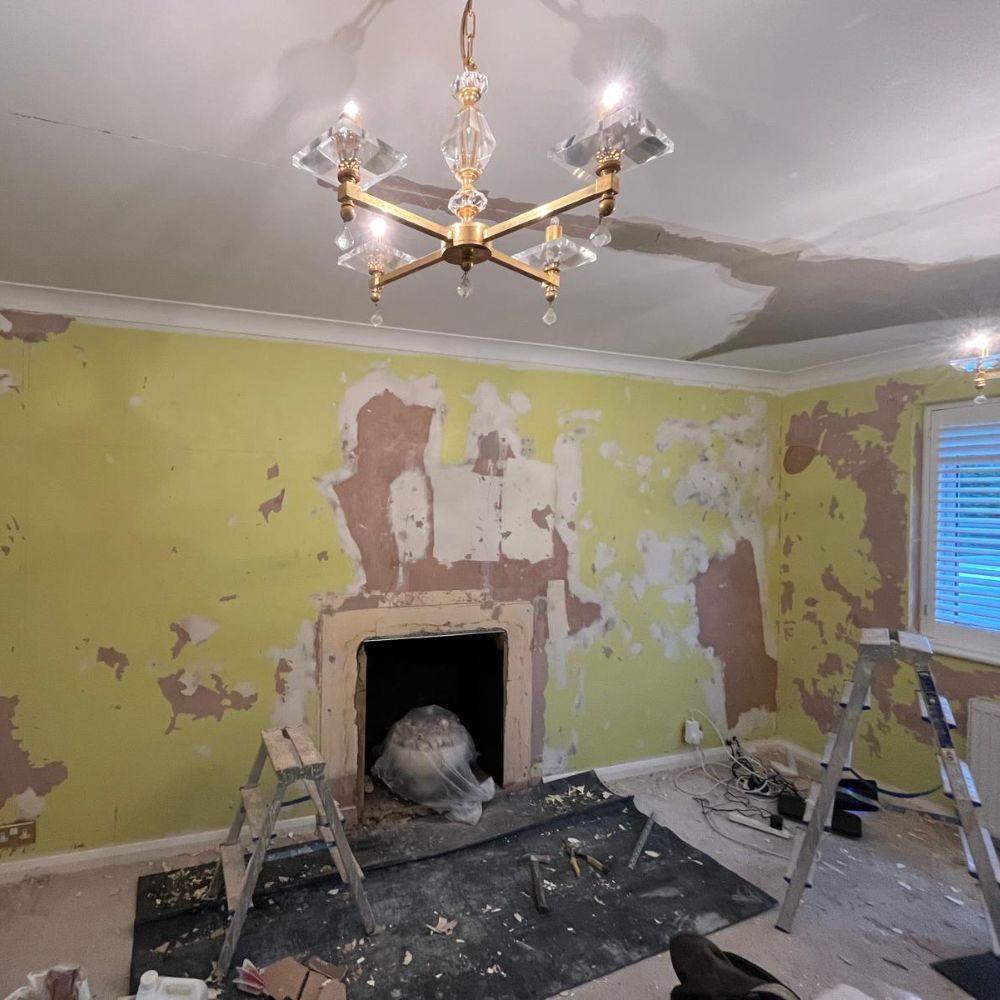
Signs Your Walls Need Replastering — and What to Do About It
Most homeowners do not think about their plaster until something goes visibly wrong. A crack appears across the ceiling, paint starts bubbling away from the wall, or a patch of plaster crumbles when you press it. By the time you notice these things, the plaster has often been deteriorating for a while beneath the surface.
Knowing what to look for means you can deal with problems early, before they become more expensive to fix. This guide covers the most common signs that your walls need replastering, explains what causes each one, and tells you what your options are when you find them.
What is Replastering and When is it Needed?
Plaster is the smooth material applied to walls and ceilings to create a flat, paintable surface. In most UK homes, walls are either solid plastered directly onto masonry or skimmed over plasterboard. Over time, plaster can deteriorate due to age, moisture, movement in the building, or poor original application. When this happens, the surface needs either a targeted repair or a full replaster depending on how widespread the damage is.
Replastering involves removing the old material and applying fresh plaster from scratch. A skim plaster involves applying a thin finishing coat over existing sound plaster or plasterboard to refresh the surface. Knowing which option you need depends on diagnosing the problem correctly.
Sign 1: Cracks in the Walls or Ceiling
Cracks are the most visible sign of plaster problems, but not all cracks are equal. Hairline cracks that run in straight lines are common in older properties and are usually caused by natural movement and settling of the building. These can often be filled and redecorated without a full replaster.
Wider cracks, cracks that follow a stepped or diagonal pattern, or cracks that reappear shortly after being filled are a different matter. These can indicate structural movement, shrinkage in the plaster, or failure of the bond between the plaster and the wall behind. If cracks keep coming back after filling, the underlying plaster may need to be removed and replaced rather than patched over repeatedly.
Cracks around window and door frames are also worth watching. These often indicate movement in the lintels or frames and should be assessed before any decorating work begins.
Sign 2: Hollow or Loose Plaster
One of the most reliable ways to identify failing plaster is to tap the wall gently with your knuckle. Sound plaster produces a solid, dull thud. Plaster that has come away from the wall behind it produces a hollow, drum-like sound. This is known as blown plaster, and it means the bond between the plaster and the masonry or base coat beneath has broken down.
Blown plaster is a serious issue because the surface may appear intact while being completely unsupported behind. It can fall away suddenly, particularly on ceilings where gravity is working against it. If you find hollow-sounding areas on your walls or ceiling, those sections need to be removed and replastered rather than simply painted over.
Sign 3: Damp Patches and Staining
Brown or yellowish staining on walls and ceilings is almost always a sign of moisture getting into the plaster from somewhere. This could be a roof leak, a plumbing leak, condensation building up in a poorly ventilated room, or rising damp coming up from the ground.
The important thing to understand here is that damp plaster should never simply be painted over. The moisture needs to be identified and the source fixed first. Once the wall has fully dried out, the affected plaster should be assessed. In many cases, water-damaged plaster loses its bond with the wall and will need to be removed and replaced. Painting over damp or stained plaster without addressing the underlying problem will cause the new paint to fail quickly and the damp to return.
Sign 4: Bubbling or Peeling Paint
If paint is bubbling, blistering or peeling away from the wall, it is usually a sign that something is wrong with the surface beneath it. Common causes include painting over new plaster before it has fully dried, damp working its way out through the wall, or old plaster that has lost its key and is no longer holding the paint properly.
Once paint starts peeling in this way, stripping it back and repainting is rarely a lasting fix. The plaster underneath needs to be assessed and, in many cases, either repaired or replaced before fresh decoration will hold properly.
Sign 5: Crumbling or Sandy Plaster
Old plaster, particularly in Victorian and Edwardian properties, was often made with lime and sand rather than the gypsum-based products used today. Over time this material can dry out, lose its binder and become soft, sandy or crumbly to the touch. If you press your hand against the wall and it leaves a powdery residue, or if the surface crumbles when you apply any pressure, the plaster has reached the end of its useful life and needs to be replaced.
Trying to decorate over soft, crumbling plaster is a waste of time and money. The new paint or wallpaper will not adhere properly and will fail quickly. The only lasting solution is to remove the old material and apply fresh plaster to the bare wall.
Sign 6: Persistent Wallpaper Problems
If wallpaper keeps lifting at the seams, bubbling in the middle, or refusing to adhere properly no matter what paste or adhesive you use, the problem is often the wall surface rather than the wallpaper itself. Walls that are too porous, too uneven, or that have old adhesive residue baked into the surface will cause wallpaper to behave unpredictably. A fresh skim of plaster gives a clean, even surface that wallpaper adheres to properly and that will not cause problems during or after hanging.
What to Do When You Find These Problems
Step 1: Get a proper assessment Before spending money on materials or attempting repairs yourself, have a professional plasterer look at the walls. A good plasterer will tell you honestly whether the problem can be patched or whether a fuller repair or replaster is needed. This assessment should be free.
Step 2: Fix any underlying issues first If the plaster problems are related to damp, leaks or structural movement, these need to be resolved before any plastering work begins. New plaster applied over an active damp problem will fail just as quickly as the old plaster did.
Step 3: Choose the right solution Not every plaster problem needs a full replaster. Targeted repairs to cracked or blown areas are often sufficient and considerably more cost-effective. A full replaster makes sense when damage is widespread, when old lime plaster has reached the end of its life throughout the property, or when a renovation project requires a completely fresh start.
Step 4: Allow proper drying time before decorating Fresh plaster needs time to dry fully before painting. Rushing this stage is one of the most common causes of paint failure on newly plastered walls. As a general rule, allow at least four to six weeks before painting, and always apply a mist coat first to seal the surface properly.
Replastering in Epsom, Surrey and South West London
If you have spotted any of these signs in your home, YD Decorating Services can help. We carry out plaster repairs, skim plastering and full replastering for residential and commercial properties across Epsom, Ashtead, Banstead, Sutton, Kingston upon Thames, Esher, Cobham, Leatherhead, Surrey and South West London.
Because we also offer a full painting and decorating service, we can take your walls from damaged plaster all the way through to a freshly decorated finish without you needing to hire two separate contractors. Call us on 0742 41 83 510 or get in touch through our website for a free, no-obligation quote.
Frequently Asked Questions
1. How do I know if my walls need replastering or just filling and painting?
The key is to assess how widespread the damage is and whether the plaster is still bonded to the wall behind it. Tap the wall with your knuckle across the affected area. If it sounds solid, targeted filling and repainting may be sufficient. If it sounds hollow in multiple places, or if the plaster crumbles when pressed, a full or partial replaster is likely the better and more cost-effective long-term solution. A professional plasterer can assess this for you and give you an honest recommendation.
2. How much does it cost to replaster a room in Surrey?
The cost to replaster a room in Surrey depends on the size of the room, the condition of the existing walls, and whether the job involves a skim coat over existing plaster or a full hack-off and replaster. As a general guide, replastering a standard bedroom in the Surrey area typically costs between £500 and £1,200, while larger rooms or rooms requiring a full hack-off will cost more. We provide free, detailed quotes for all replastering work across Epsom, Surrey and South West London so you know the exact cost before any work begins.
3. Can I paint straight over cracked plaster without replastering?
For minor hairline cracks, filling and painting over them can work well as a short-term solution. However, if cracks are wide, structural, or keep reappearing after filling, painting over them without addressing the underlying issue will not last. The cracks will push back through the new paint relatively quickly. Where cracking is a symptom of failing or hollow plaster, the only lasting fix is to remove and replace the affected plaster before redecorating.
4. What causes plaster to blow or come away from the wall?
Blown plaster occurs when the bond between the plaster and the substrate beneath it breaks down. This can be caused by age and natural deterioration, moisture getting behind the plaster, vibration or impact damage, or poor original application. It is particularly common in older properties where the original lime plaster has dried out and contracted over many decades. Once plaster has blown, it cannot be re-bonded and needs to be removed and replaced.
5. How long does replastering a room take?
Replastering a standard room typically takes one to two days for the actual plastering work, depending on whether it is a skim coat or a full hack-off and replaster. After the plastering is complete, the plaster needs adequate time to dry before any decoration can begin. This drying period is usually between four and six weeks depending on the thickness of the plaster, the room temperature and ventilation. Rushing this drying period is one of the most common causes of paint failure on newly plastered walls.
6. Can damp cause plaster to fail?
Yes. Moisture is one of the most common causes of plaster failure in UK homes. Water getting into the wall from a leak, rising damp or condensation weakens the bond between plaster and wall, causes staining and in some cases leads the plaster to soften and crumble. Crucially, the source of the damp must be identified and fully resolved before any replastering work is carried out. Applying new plaster over an active damp problem will result in the new plaster failing in the same way as the old.
7. Should I replaster before or after other renovation work?
Plastering should generally be done after any structural, electrical or plumbing work has been completed, since chasing cables and pipes into walls will damage any plaster applied beforehand. Replastering should then be done before any painting, decorating, tiling or flooring is installed, as it creates the clean base that all subsequent finishing work relies on. If you are planning a larger renovation in your Surrey or London home, a plasterer can advise on the correct order of works for your specific project.
8. What is the difference between a skim coat and a full replaster?
A skim coat involves applying a thin layer of finishing plaster over an existing sound surface to refresh and smooth it. It is quicker, less disruptive and less expensive than a full replaster. A full replaster involves removing all the existing plaster back to the bare wall and applying fresh coats from scratch. A full replaster is needed when the existing plaster is blown, crumbling, severely damaged or too uneven to skim over successfully. A professional plasterer will advise you on which approach is appropriate for your walls.
9. Can I stay in my home while replastering is being carried out?
In most cases, yes. Replastering is a messy job that produces plaster dust and requires the room to be cleared, but it does not make the property uninhabitable. Most plasterers dust sheet the room and surrounding areas carefully to contain the mess, and a room can usually be accessed again within a day or two of the plaster being applied, once the initial setting period has passed. You will need to keep the room clear and well ventilated during the drying period before decoration can begin.
10. Do you offer plastering and decorating as a combined service in Surrey?
Yes. YD Decorating Services offers a full combined plastering and decorating service for properties across Epsom, Surrey and South West London. We can replaster or repair your walls and then follow through with a complete paint finish or wallpapering once the plaster has dried, without you needing to find and coordinate two separate contractors. This saves time, reduces disruption and ensures the finished result is consistent throughout. Call us on 0742 41 83 510 or complete our online enquiry form for a free quote.