
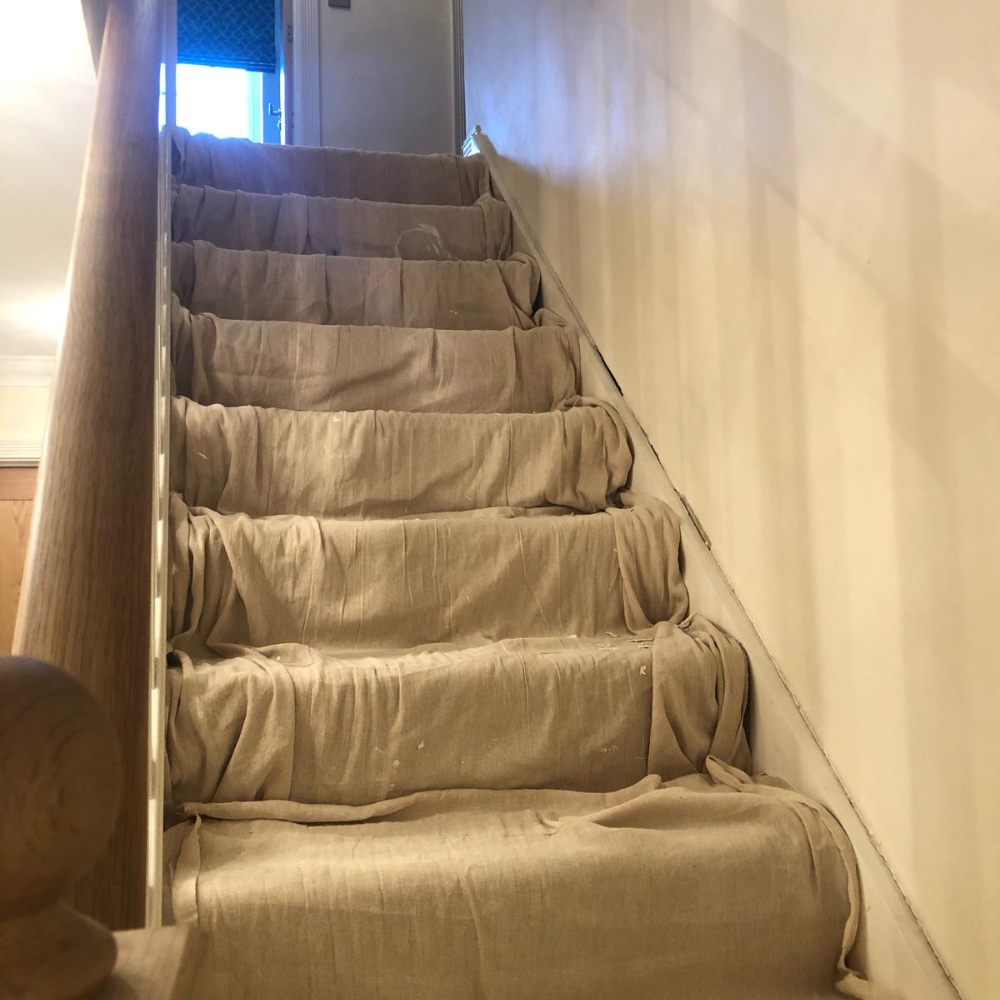
Hall, Stairs and Landing Decorating: Cost, Colour Ideas and How Long It Takes
The hall, stairs and landing is one of the most important areas of any home to get right. It is the first space you and your guests see when you walk through the front door, it connects every room in the house, and it sets the tone for everything beyond it. Yet it is also one of the most frequently neglected areas when it comes to decorating, largely because it is one of the most challenging spaces to work in.
Awkward angles, high ceilings, restricted access, intricate woodwork and the fact that the space is in constant use all make hall, stairs and landing decorating more complex than a standard room. This guide covers what the job actually involves, what it typically costs in Surrey and London, the best colour ideas for different property types, and how long you should expect the work to take.
Why Hall, Stairs and Landing Decorating is More Complex Than a Standard Room
Before looking at costs and colours, it is worth understanding why decorating a hall, stairs and landing is genuinely more demanding than painting a bedroom or living room.
The main challenges are access and height. In most homes, the stairwell creates a double-height or even triple-height void that requires specialist access equipment to reach safely. Professional decorators use tall ladders, combination ladders, staircase ladder systems and sometimes platform towers to access high walls and ceilings safely. Working at height in a confined stairwell takes more time and requires more care than working in a standard room.
The geometry is also more complex. Halls and landings have multiple doorways, architraves, skirting boards, handrails, spindles and balusters that all require careful cutting in, masking and finishing. A staircase with painted spindles alone can add a significant amount of time to a job compared to a simple open room.
Finally, the hall, stairs and landing is rarely out of use. Unlike a bedroom which can be closed off entirely while work is carried out, the hall and staircase are the route through the house and need to remain at least partially accessible throughout the job.
What Does Hall, Stairs and Landing Decorating Include?
A full hall, stairs and landing decoration typically covers the following:
- Walls throughout the hallway, stairwell and landing
- Ceilings in the hallway and landing
- The stairwell ceiling if there is a high void
- Skirting boards throughout
- Architraves around all doors
- Handrail, newel posts and balusters or spindles
- Doors and door frames opening onto the hall and landing
- Any coving or ceiling roses present
Not all jobs include every element. Some clients want walls and ceilings painted but are happy with the existing woodwork finish. Others want a full redecoration including all woodwork repainted in a fresh colour. Be clear with your decorator about exactly what you want included when requesting a quote so the price reflects the full scope of the work.
How Much Does Hall, Stairs and Landing Decorating Cost?
Cost is one of the first questions most homeowners ask when thinking about this project. The honest answer is that hall, stairs and landing decorating costs more per square metre than a straightforward room, and for good reason.
For a typical mid-terraced or semi-detached house in Surrey or South West London, a full hall, stairs and landing redecoration including walls, ceilings and all woodwork typically costs between £800 and £1,800 depending on the size of the property, the condition of the surfaces, the number of spindles and the complexity of the access required. Larger detached properties with double-height stairwells, period features and extensive woodwork can cost more.
The main factors that affect the price are:
Size of the space. A narrow terraced hallway with a straight staircase costs less than a wide entrance hall with a sweeping staircase and a large galleried landing.
Condition of the surfaces. Walls that need significant filling, sanding or preparation before painting take longer than surfaces in good condition. If the walls also need skim plastering before decoration, this adds to the overall cost.
Number of spindles and balusters. Painting individual spindles by hand is time-consuming work. A staircase with 30 or 40 turned spindles adds considerably to the labour time compared to a simple open-tread staircase or one with a continuous panel rather than individual spindles.
Paint specification. The cost of materials varies depending on the paint brands you choose. Standard trade emulsions and satinwood are significantly less expensive than premium brands such as Farrow and Ball or Little Greene, though the quality of finish and longevity can justify the higher cost.
Access requirements. A straight staircase is straightforward to work on with a combination ladder. A winding or spiral staircase, a double-height void or a particularly high stairwell ceiling requires more time to set up and work safely, which increases the labour cost.
The best way to get an accurate price for your specific hall, stairs and landing is to invite a decorator to visit the property and assess the space in person. At YD Decorating Services, we provide free, no-obligation quotes for all hall, stairs and landing projects across Epsom, Surrey and South West London.
Colour Ideas for Hall, Stairs and Landing
Choosing the right colour for a hall, stairs and landing is a balance between making a strong impression and choosing something that will work with the rest of the house. Here are some of the approaches we see most often with our clients across Surrey and London.
Neutral and Warm Whites
White, off-white and warm neutral tones remain the most popular choice for hall, stairs and landing across all property types. They make spaces feel light and open, work with virtually any adjoining room colour, and create a clean canvas that does not date quickly. Popular choices include Farrow and Ball All White, Dulux Jasmine White and Little Greene Linen.
A true bright white can feel cold and clinical in a hall that does not receive much natural light. Warmer whites with a slight cream or grey undertone tend to feel more welcoming and work better in north-facing or darker hallways.
Bold and Dark Feature Colours
Dark, saturated colours have become increasingly popular for halls and stairwells over the past few years, particularly in period properties. Deep navy, forest green, charcoal and rich terracotta all work well in a hallway because the space is transitional rather than one you spend long periods of time in, which means you can afford to be bolder than you might be in a living room or bedroom.
Dark colours also make high-ceilinged stairwells feel more intimate and less cavernous, and they provide a dramatic backdrop for artwork, mirrors and light fittings.
Two-Tone Schemes
A very popular approach in Victorian and Edwardian properties is to use a dado rail as a dividing line, with a darker or more saturated colour below the rail and a lighter complementary tone above. This works well in period hallways where the proportions and original features suit the traditional treatment.
A simpler version of this is to paint the walls in one colour and use a contrasting tone on the woodwork, doors and handrail. A pale grey wall with crisp white woodwork is a timeless combination that works in almost any property type.
Colour Flow Through the House
Because the hall, stairs and landing connects every room in the house, it is worth thinking about how the colours you choose in this space will work with the rooms that open off it. You do not need to use the same colour throughout, but choosing tones from the same family or palette creates a sense of flow and coherence that makes the whole house feel more considered.
How Long Does Hall, Stairs and Landing Decorating Take?
The time required to decorate a hall, stairs and landing varies depending on the size of the space, the complexity of the woodwork and the scope of the job.
As a general guide:
- A small terraced house hallway with a single staircase and landing: two to three days
- A mid-sized semi-detached or detached house with a full staircase, landing and first floor hallway: three to five days
- A larger detached property with a double-height stairwell, extensive woodwork and a galleried landing: five to seven days or more
These timescales assume walls, ceilings and woodwork are all included. If the job also involves plastering or skim plastering walls before decoration, additional time is needed for the plaster to be applied and for it to dry before painting can begin.
One thing worth factoring in is that woodwork, particularly gloss or satinwood on handrails, balusters and doors, requires multiple coats with drying time between each coat. The decorator will manage this by working on different elements in sequence, but it means the total duration is longer than a straightforward wall and ceiling paint job.
Should You Redecorate Hall, Stairs and Landing at the Same Time?
The answer is almost always yes. Because the three areas are connected and visible from each other simultaneously, decorating them at different times almost always results in a mismatch of colours, finishes or condition that is obvious to anyone walking through the space.
Decorating them together is also more efficient and less disruptive than splitting the work into separate visits. The decorator can set up access equipment once, work through the full space in a logical sequence, and leave you with a completely refreshed and cohesive result in a single project.
Hall, Stairs and Landing Decorating in Surrey and London
If you are ready to transform your hall, stairs and landing, YD Decorating Services provides professional painting and decorating for properties across Epsom, Ashtead, Banstead, Tadworth, Sutton, Kingston upon Thames, Esher, Cobham, Leatherhead and the wider Surrey and South West London area.
We have extensive experience working on all types of hall, stairs and landing projects, from narrow terraced hallways through to large period staircases with ornate woodwork. We provide free, no-obligation quotes and are happy to advise on colours, finishes and the best approach for your specific property before the job begins.
Call us on 0742 41 83 510 or complete our online enquiry form to book your free quote.
Frequently Asked Questions
1. How much does it cost to decorate a hall, stairs and landing in Surrey?
For a typical mid-terraced or semi-detached house in Surrey, a full hall, stairs and landing redecoration including walls, ceilings and all woodwork generally costs between £800 and £1,800. Larger detached properties, homes with double-height stairwells, period properties with ornate woodwork, or projects that also require plastering before decoration will cost more. The most accurate way to get a price for your specific home is to have a decorator visit and assess the space in person. YD Decorating Services offers free, no-obligation quotes for all hall, stairs and landing projects across Epsom and the wider Surrey and South West London area.
2. How long does it take to decorate a hall, stairs and landing?
For a small to medium terraced or semi-detached house, a full hall, stairs and landing decoration typically takes between two and five days depending on the size of the space, the amount of woodwork involved and the scope of the job. Larger properties with extensive woodwork, high stairwells or ornate period features will take longer. The woodwork element, particularly painting individual spindles and balusters, adds significant time compared to a straightforward wall and ceiling paint job.
3. What is the best colour for a hallway in the UK?
There is no single best colour, but the most consistently successful hallway colours fall into two broad camps. Warm whites, off-whites and light neutral tones work well in smaller or darker hallways, making the space feel light, open and welcoming. Bold, deeper colours such as dark navy, forest green, warm charcoal and rich earthy tones work particularly well in larger halls and period properties, where they create a strong first impression and make the space feel more considered and characterful. A good decorator will help you find the right tone for your specific hallway, taking into account the natural light available and the colours in the rooms adjoining it.
4. Do you paint spindles and balusters as part of a hall, stairs and landing job?
Yes. Painting spindles, balusters, handrails and newel posts is included as part of a full hall, stairs and landing redecoration. It is worth being aware that painting individual turned spindles is time-consuming work that adds to the overall duration and cost of the job. If your staircase has a large number of spindles that are currently painted, the decorator will need to sand them down and apply multiple coats to get a clean, even finish. If the spindles are currently natural wood, a conversation about whether to paint or varnish them is worth having before work begins.
5. Should I use the same colour throughout the hall, stairs and landing?
Using the same wall colour throughout the hall, stairs and landing creates a clean, unified feel and is the most popular approach. It also makes the space feel larger and more cohesive. However, using two complementary tones, such as a slightly deeper shade on the lower half of the wall below a dado rail and a lighter tone above, can work very well in period properties with the right proportions. The most important thing is that the colours you choose in the hall work alongside the colours visible through open doorways into adjoining rooms, as these will all be seen simultaneously.
6. Can you plaster and then decorate the hall, stairs and landing as part of one job?
Yes. We regularly carry out combined plastering and decorating projects in halls and stairwells across Surrey and South West London. If your hallway walls are cracked, uneven or in need of a skim before decoration, we can plaster them first and then follow through with the full paint job once the plaster has dried properly. Having one contractor handle both elements is more convenient, reduces disruption, and ensures the surface is prepared in exactly the way the decorator needs it to be before painting begins.
7. What paint finish should I use on hallway walls?
Hallways take a lot of daily wear including scuffs, handprints and general contact from people and bags moving through the space. A silk or eggshell finish on hallway walls is more durable and easier to wipe down than a standard matt emulsion, which is why most professional decorators recommend one of these two options for this area. Eggshell has a lower, more subtle sheen and is slightly harder once dry, making it a particularly good choice for busy family hallways. For the woodwork, doors, skirting boards and architraves, satinwood or gloss provides the hard-wearing finish that these surfaces need.
8. Do I need to move furniture and clear the hallway before the decorator arrives?
Yes. Clear the hallway of shoes, coats, side tables, mirrors, pictures and any other items as completely as possible before the decorator arrives. Hallways are already narrow working spaces, and clutter makes them significantly harder and slower to work in. Remove any items from the walls and take down mirrors or pictures so the decorator has clean access to every wall surface. If you have a coat rack or storage unit fixed to the wall, let the decorator know in advance so they can plan around it or advise whether it needs to be temporarily removed.
9. Is it worth redecorating the hall, stairs and landing before selling a house?
Almost always yes. The hallway is the first interior space a potential buyer sees when they walk through the door, and the impression it creates sets the tone for the entire viewing. A freshly decorated hall, stairs and landing in a clean, neutral colour makes a property feel well-maintained, cared for and move-in ready, all of which contribute positively to a buyer’s perception of the home. The relatively modest cost of refreshing this area compares favourably with the impact it can have on the overall impression a property makes during viewings.
10. How do I get a quote for hall, stairs and landing decorating in Surrey?
Call us on 0742 41 83 510, email info@yddecorating.co.uk or complete the enquiry form on our website. We will arrange a convenient time to visit your property, assess the hall, stairs and landing in person, and provide a clear, detailed, fixed-price quote at no charge and with no obligation. We cover Epsom, Ashtead, Banstead, Tadworth, Sutton, Kingston upon Thames, Esher, Cobham, Leatherhead and the wider Surrey and South West London area, and we are happy to advise on colours, finishes and the right approach for your home before committing to anything.